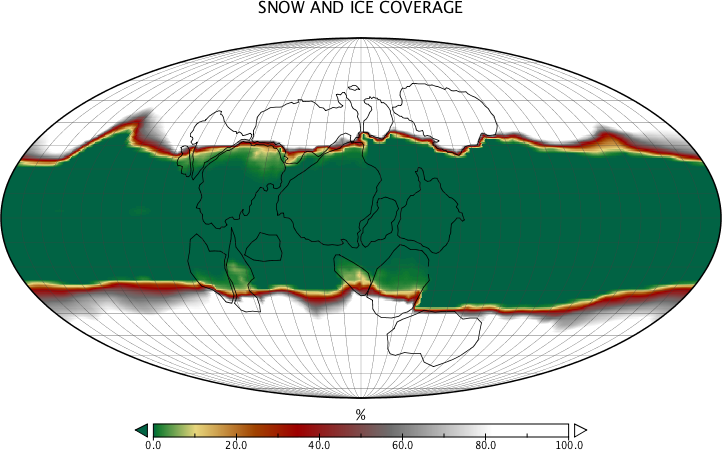
A less extreme version of the Snowball Earth hypothesis coined by Richard Cowen, the Slushball Earth hypothesis, agrees with the fact that ice surrounded Earth during the same time period but argues that the ice was very thin, which allowed autotrophs to continue performing photosynthesis in spite of the intense cold[2]. This theory came to be after a team of scientists drilled into shale deposits in Brazil to find a thriving microbial ecosystem, which included photosynthetic organisms. As Enriqueta Barrera, a program director at the NSF Division of Earth Sciences, stated, “This evidence for life in parts of the global oceans requires a revision of our interpretations related to this period of low-latitude glaciation”[4]. Moreover, simulations run by scientists at Columbia University of the Cryogenian period show that the Earth could not completely freeze over. Areas with liquid water still existed near the equator and because of ocean currents redistributing the sun's heat, the model Earth could not form a complete snowball[3].