Certain diamictites, or poorly sorted, sedimentary rock, that date back to the Neoproterozoic era show signs of being formed by glaciers. These rocks have been found in several locations around the world, which can be seen as proof for the global nature of the glaciation that occurred during the Cryogenian period.
However, new information shows several new ways that diamictites could have formed, including deepwater debris. This may render any evidence regarding diamictites useless in determining if a Snowball Earth really occurred[2].
Like the diamictites, which are currently missing crucial evidence as to their origin, the Snowball Earth hypothesis lacks evidence in certain areas that may totally change our perception of the Cryogenian period. For example, the theory hasn't been extensively tested using computer-generated climate models. When NASA and Columbia University did conduct a study, the results showed a more Slushball-like Earth (see competing hypotheses)[4].
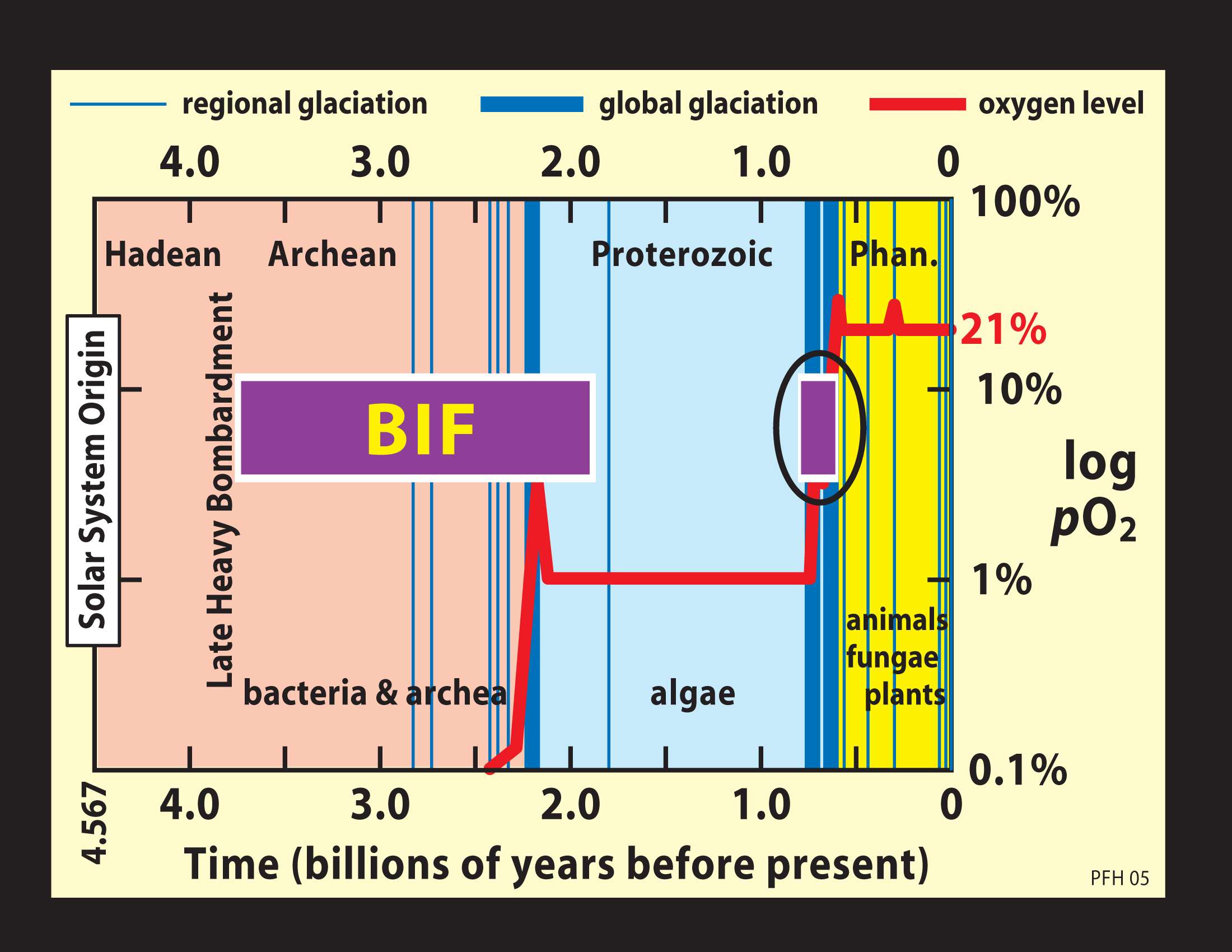
Secondly, banded iron formations (BIFs), which are sedimentary rocks with layers of iron oxide and iron-less chert (a hard sedimentary rock composed of silicon dioxide), offer insight into the reality of Snowball Earth. BIF deposits in the ocean indicate low oxygen levels in the water, which are characteristic of frozen oceans. Such deposits have been found dating back to the Cryogenian period. In contrast, today's oceans show low iron oxide levels because the bodies of water are liquid[2].
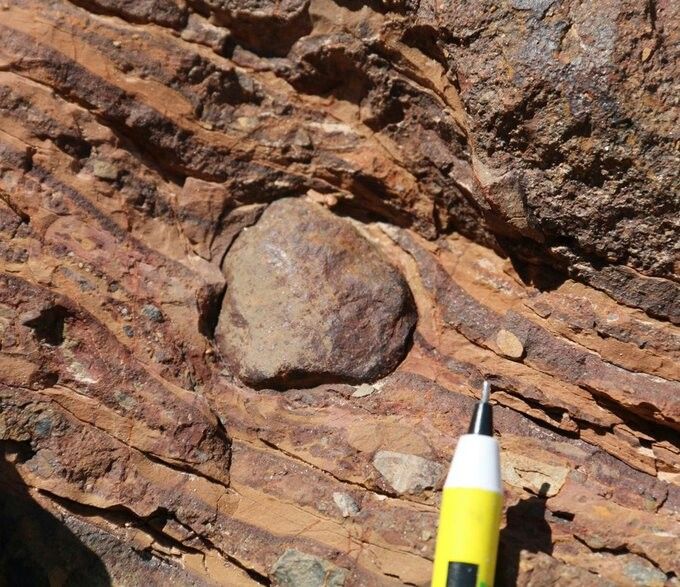
Moreover, dropstones can be cited as evidence for the occurrence of Snowball Earth. Dropstones are rocks encapsulated by glaciers and are carried into bodies of water.
When the glacier melts, the rock merges with the underlying, existing strata. Hoffman, who conducted research in Namibia, found glacial dropstones in certain rock formations. This evidence was especially surprising because a glacier rarely ever occurs in tropical regions, such as present-day Africa. Similar dropstones found across the world from the same time period have been discovered, which can be used as strong evidence for global glaciation[5].
Lastly, a manganese ore deposit approximately 150 feet thick in the Kalahari Desert that dates back to the Snowball Earth period is thought to exist due to extreme climate change after the melting of glacial deposits. This implies the existence of a glacier in the tropical region where the desert is situated that led to the deposition of the ore[1].