The Snowball Earth hypothesis describes the claim that during the Cryogenian period, which occurred 630 million years ago, the Earth was completely frozen. Currently, it the best explanation for glaciers in the tropics during the Cryogenian period, despite it still being controversial among some paleontologists. These opponents agree with the overwhelming evidence for glaciers in the tropics, but disagree with the claim that these glaciations occurred on a global scale.
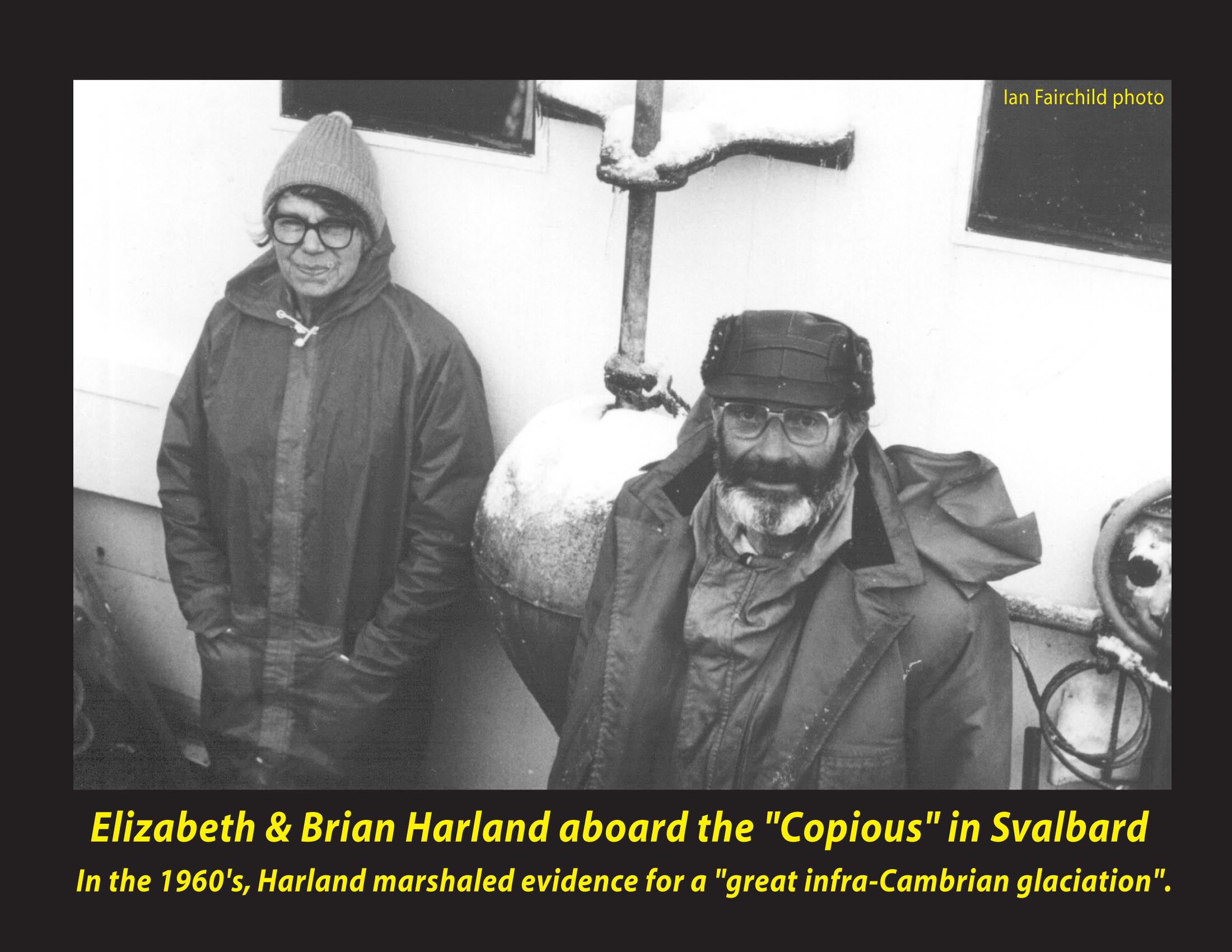
The theory's inception can be traced back to Brian Harland, a British geologist, who in 1964 presented evidence that pointed to glacial deposits in Svalbard and Greenland, which are areas typically without ice.
Mikhail Budyko of the Leningrad Geophysical Observatory would then go on to devise a model of positive albedo feedback in which portions of the Earth would slowly freeze starting from the poles until everything was frozen. An albedo is the fraction of light reflected by a celestial body, in this case the Earth, while a positive feedback loop is when an event's reaction results in an increase in said reaction. However, Budyko didn’t believe that this could have actually occurred, as he did not find a way in which the Earth could eventually return to its original state, the one it is currently in. Additionally, he thought that life could not persist through the Snowball Earth period, making it highly unlikely for it to have occurred considering life still exists today.
The actual term, "Snowball Earth," was coined by Joseph Kirschvink, a Caltech professor, in the early 2000's. Kirschvink came to the same conclusion as his predecessors: global cooling occurred due to an ice-albedo positive feedback loop. But he also found that Earth successfully underwent a defreeze due to volcanic degassing, or the release of gases (specifically carbon dioxide) stored in magma.
Later, Paul Hoffman and his colleagues expanded on Kirschvink's work and discovered that the entirety of the Earth, including all its oceans, was covered by ice for 30 million years[2].